Shock Pad for Faux Grass (2026): What It Does, 5 Benefits and When You Need One
As an Amazon Associate we earn from qualifying purchases.
A shock pad is a foam or rubber layer laid between the base and the turf to absorb impact.
It sits on top of the compacted base, under the turf. A shock pad makes turf softer underfoot and cushions falls under play equipment. It also hides small bumps in the base and protects the turf backing from sharp stones. For playgrounds, it's the part that does the safety work. The turf on top is mostly the finish.
Please read first: this guide explains fall-height ratings in plain language. It isn't legal or engineering advice. For public playgrounds, follow the US Consumer Product Safety Commission (CPSC) Public Playground Safety Handbook and the current ASTM standards, and work with a qualified installer.
What are the benefits of a shock pad?
Five benefits explain why installers use one:
- Fall protection. A rated pad cushions falls under swings, climbing frames and trampolines.
- Comfort. Turf feels softer and more like real grass underfoot.
- A smoother finish. The pad bridges small dips and stones in the base, so they don't show through.
- Longer turf life. It protects the backing from sharp aggregate and spreads foot pressure.
- Less noise and joint strain. On sports and play areas, a pad softens every step and landing.
Do you need one?
It depends on how the turf will be used.
You need a shock pad under any play equipment someone can fall from, such as swings, climbing frames and slides. You also need one around in-ground trampolines and on sports and agility areas. There, the pad's rating must match the fall height. See faux grass for playgrounds and faux grass under trampolines.
On an ordinary lawn, though, it's optional. A pad adds comfort, but it isn't required.
For dog areas, choose carefully. Solid foam soaks up urine and holds odour. Use a perforated, non-absorbing pad, a draining tile, or skip the pad and rely on a well-drained base. See faux grass for dog runs.
How do fall-height ratings work?
Pad thickness alone doesn't tell you how safe it is. The rating does.
ASTM F1292 is the standard impact test for playground surfacing. A lab drops a test headform onto the full system, pad plus turf, from increasing heights. The highest height where the impact scores stay under the limits is the critical fall height. A system rated for 6 ft has passed at 6 ft.
From that, three rules follow:
- Match the rating to your tallest piece of equipment. Fall height is generally the height of the highest platform or deck. Swings have their own rules in the CPSC handbook.
- Choose a margin. IPEMA, the industry certification body, advises picking surfacing that performs well below its limits at your fall height.
- The rating covers the system, not the pad alone. A pad tested under one turf may score differently under another. Ask for the test report for the exact combination.
Here's how that looks in practice. ForeverLawn's SafetyFoam Pro datasheet says its pad comes in thicknesses rated for fall heights from 3 ft to 10 ft under its Playground Grass. Generic foam with no test data has no rated fall height at all.
How to lay a shock pad under faux grass
Follow these steps to avoid problems later:
- Build and compact the base. Lay crushed aggregate, then compact it flat. A pad won't fix a soft or uneven base. See faux grass base.
- Roll out the pad. Lay it across the whole area, extending past the equipment's use zone.
- Butt the joints tightly. Push panels or rolls edge to edge, with no gaps and no overlaps.
- Tape the seams. Use the maker's tape or seam method, so joints can't open up.
- Check drainage. Outdoors, use perforated or draining pads, and keep the base sloped so water runs off.
- Lay the turf on top. Trim it to fit, then secure the perimeter with edging or stakes as the pad maker advises.
- Infill if your turf needs it. Follow the turf and pad makers' rates.
What to look for
Check these features before you buy:
- A tested fall-height rating for play areas, to ASTM F1292, for the full pad-and-turf system.
- Foam or rubber. Foam is lighter, cheaper and softer. Rubber lasts longer and stays stable under furniture, but it costs more and gives less cushion at thin gauges.
- Drainage. Perforations or a draining structure for outdoor use.
- Non-absorbing material for pet areas.
- Panel or roll size. Larger panels mean fewer seams, so fewer weak spots.
Best picks
These picks cover most homes.
1. ForeverLawn Playground Grass + SafetyFoam Pro — Best Rated Playground System
Fall rating: 3 to 10 ft by pad thickness (ForeverLawn datasheet) | Warranty: "8 × 8" safety surface warranty (brand claim) | Sold: through ForeverLawn dealers (non-affiliate)
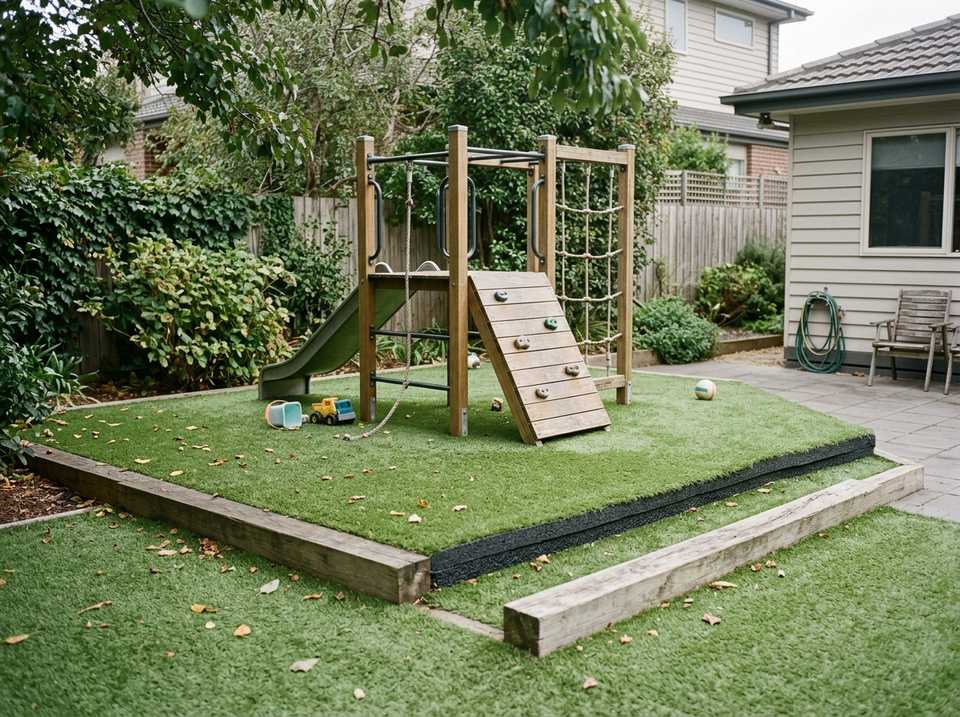
The clearest option if you want a stated fall rating for a backyard playset. But it's dealer-installed and costs far more than DIY pads.
Our take: from our hands-on work with artificial grass, turf and pad sold as one matched system lies flatter and seams more cleanly than parts mixed from different makers, and, as ASTM F1292 tests the full system, a rating for the exact combination is the one worth asking for.
2. Greatmats Foam Turf Pad, 2-1/4 in — Best DIY Pad for Play Areas
Thickness: 2-1/4 in (also 1-1/4 in) | Size: 39-1/16 × 90-9/16 in panels | Sold by: Greatmats (non-affiliate)
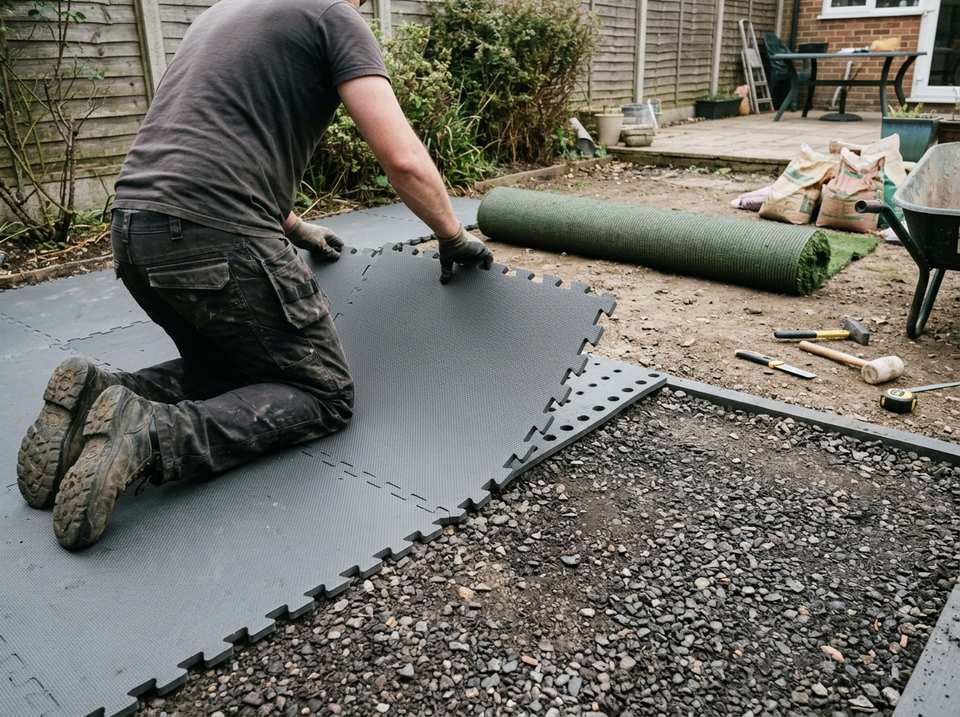
The thickest DIY pad in our research, in large panels with fewer seams. But ask Greatmats for test data before you rely on it for a specific fall height.
Our take: in our experience laying artificial grass over foam, big panels like these are the easiest way to get a smooth finish; every extra seam is a spot where the turf can show a faint ridge.
3. Greatmats TurfShok Rubber Underlay, 8 mm — Best Pad for Decks and Concrete
Thickness: 8 mm (also 10 and 12 mm) | Material: rubber | Width: 4 ft rolls | Sold by: Greatmats (non-affiliate)
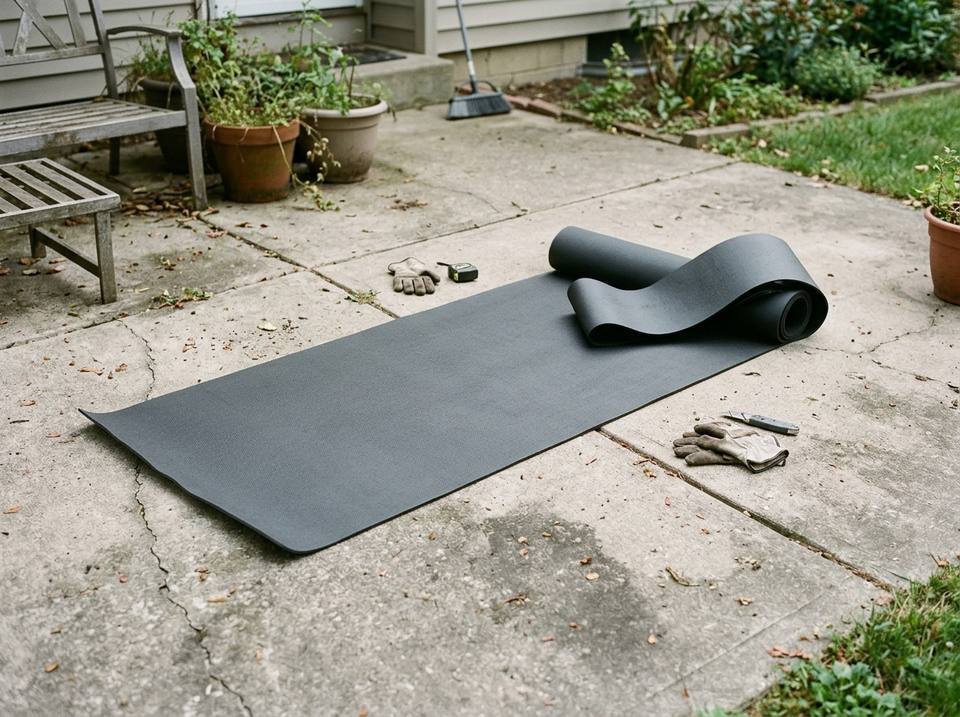
A thin rubber pad that hides joints and adds comfort on hard surfaces, while keeping furniture stable. But it's for comfort, not fall protection.
Our take: from our hands-on work with artificial grass on hard floors, a thin rubber layer like this stops paving joints from telegraphing through the turf, which makes a patio look far more like a lawn.
4. VEVOR Interlocking Drainage Mats — Best Draining Pad for Pet and Patio Areas
Size: 12 × 12 in, 12 per pack | Material: soft PVC with drainage holes (seller-listed)
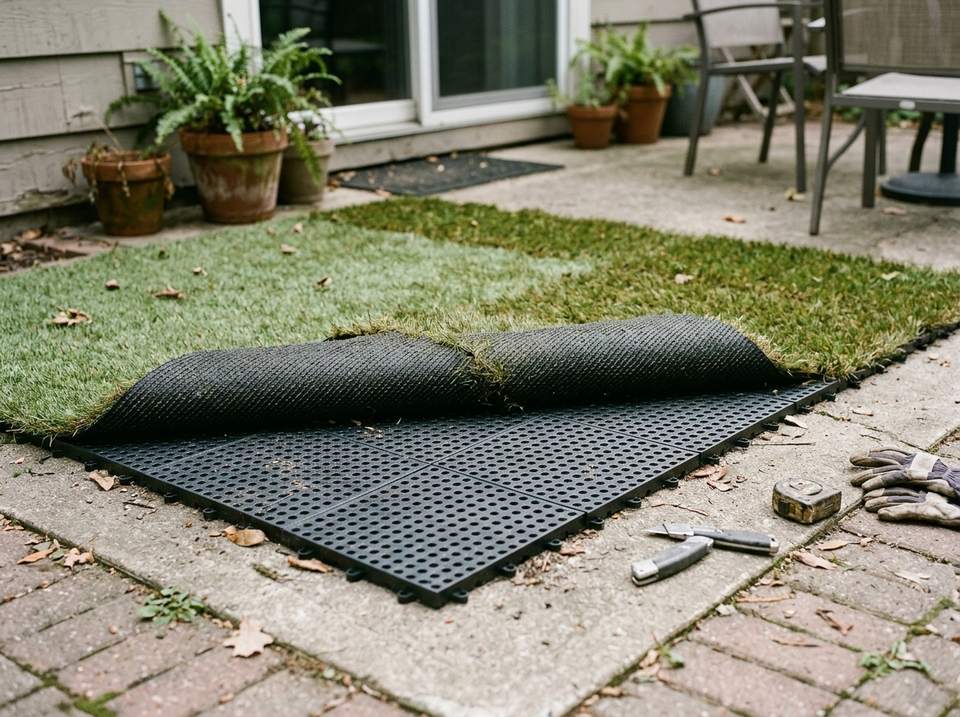
A non-absorbing, draining layer that suits dog patios and wet spots. But it adds little cushion and isn't fall-rated.
Our take: in our experience with artificial grass, keeping water moving under the turf matters more than softness in wet or pet areas; a raised, open tile like this lets the backing dry out instead of sitting damp.
5. ProsourceFit 1/2 in Puzzle Mats — Best Budget Foam Pad for Indoors
Thickness: 1/2 in | Material: high-density EVA foam | Pack: 12 tiles, 48 sq ft
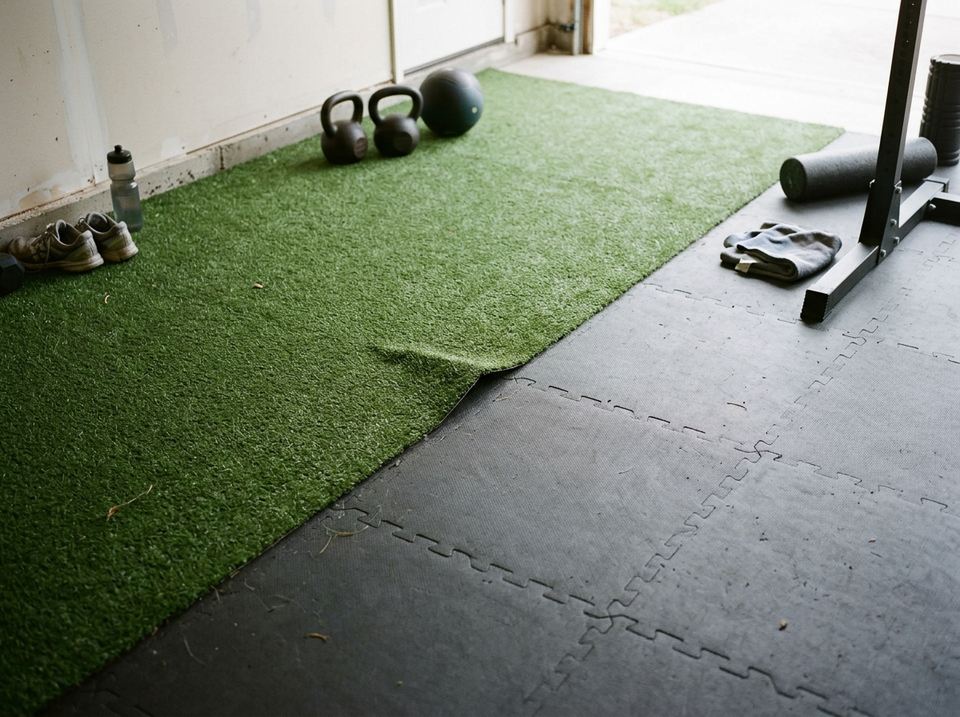
A cheap, soft layer for indoor turf, gyms and play rooms. But solid foam holds water, so keep it indoors, and it isn't fall-rated.
Our take: from our indoor work with artificial grass, puzzle foam gives a pleasant, springy feel underfoot, but the interlocking edges can show through thin turf, so pair it with a denser pile.
Alternatives
You don't always need to buy one. These options add comfort, but not fall protection:
- A taller, softer pile. It feels softer underfoot. See soft faux grass.
- More infill. Infill at the full rate makes turf feel firmer and fuller. See our infill guide.
- A thin underlay. For decks and patios, a thin rubber or foam layer is enough. See faux grass padding.
None of these replace a rated shock pad under play equipment.