How Much Does Faux Grass Cost in 2026? Price per Square Foot, Full-Yard Examples and Where the Money Goes
Most installed faux grass lawns cost about $10 to $20 per square foot in 2026, and labor is more than half of that.
Faux grass cost is the turf itself plus the base, supplies and labor, usually quoted per square foot installed. The turf is only part of the bill. Digging out the old lawn, building a compacted base and seaming the turf take time and equipment, and that's where most of the money goes. So two quotes for the same yard can differ by thousands, depending on the site and what's included.
This guide breaks down the cost per square foot, gives worked examples by yard size, explains what drives the price and shows how to compare quotes. We drew on cost guides from SitePrep, LawnLove, Pro Tool Reviews and California installer Big Bully Turf. Prices vary by region and change over time, so treat every figure as a range, not a quote.
The short answer: Installed faux grass usually costs about $10 to $20 per sq ft. Sources range from about $5.45 at the low end (LawnLove) to $22 at the high end (SitePrep). LawnLove puts the average at about $12.75 per sq ft, with labor making up 50 to 60% of the total.
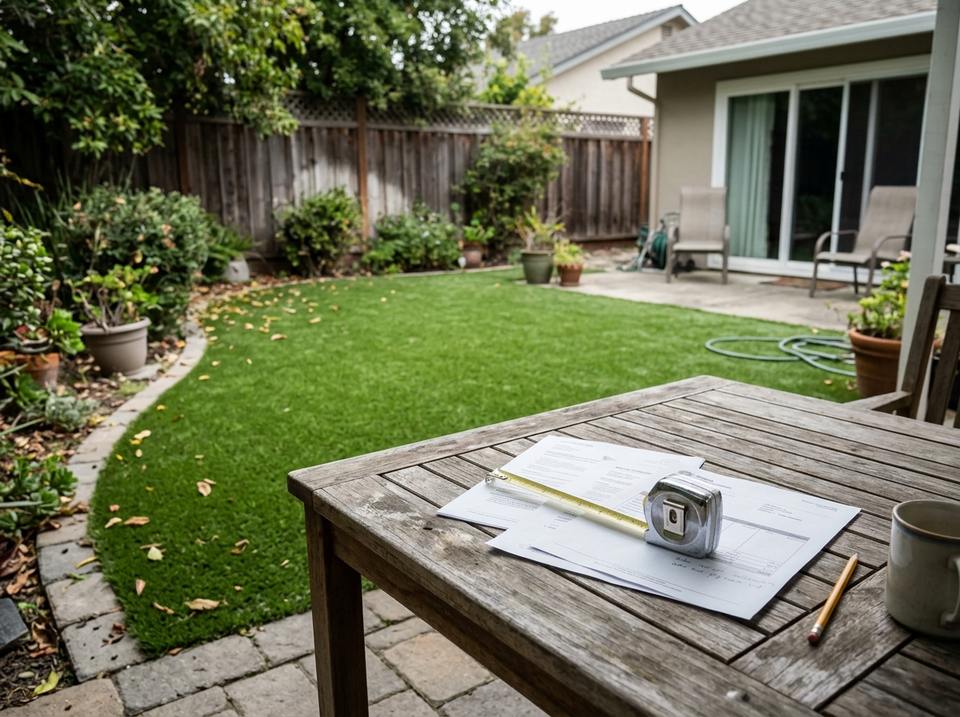
Faux grass cost per square foot
Here is where each dollar per square foot goes.
| Cost item | Typical range per sq ft | Source |
|---|---|---|
| Turf material, budget | About $2 to $5 | Retail and editorial ranges |
| Turf material, mid and premium | Higher, depending on face weight and fibre | Varies by brand |
| Base aggregate | About $0.30 to $0.70 | Pro Tool Reviews |
| Landscape fabric | About $0.40 to $0.80 | Pro Tool Reviews |
| Infill, seam tape, nails | A smaller share of the total | Varies by product |
| Labor | About 50 to 60% of the total | LawnLove |
| Total installed | About $10 to $20, sources range $5.45 to $22 | SitePrep, LawnLove |
How much is artificial grass per square foot installed? Usually $10 to $20, with an average of about $12.75 according to LawnLove. SitePrep's range runs from $12 to $22.
How much is turf material only? Budget turf starts around $2 to $5 per sq ft. Thicker, denser, nylon-blend and pet-specific turf costs more. For product options by budget, see faux grass under $50 and under $100.
On top of that, region matters too. Big Bully Turf quotes about $9 to $20 per sq ft in California, and notes the price per square foot falls as the area grows.
What does a whole yard cost?
These examples show the typical range for common yard sizes.
| Yard size | Installed (about $10 to $20/sq ft) | DIY materials (about 40 to 50% of installed) |
|---|---|---|
| 100 sq ft | About $1,000 to $2,000 | About $400 to $1,000 |
| 300 sq ft | About $3,000 to $6,000 | About $1,200 to $3,000 |
| 500 sq ft | About $5,000 to $10,000 | About $2,000 to $5,000 |
| 1,000 sq ft | About $10,000 to $20,000, often less per sq ft | About $4,000 to $10,000 |
These are our worked estimates from the ranges above, not quotes. For comparison, SitePrep puts a 300 sq ft yard at about $3,600 to $6,600 installed. The DIY column assumes labor is 50 to 60% of the total, as LawnLove reports, so DIY costs roughly the other 40 to 50%, before tool rental.
How much does it cost to turf a 300 sq ft yard? About $3,000 to $6,600 installed, depending on the source and site. Use our cost calculator for your own numbers.
What makes faux grass cost more or less?
Seven factors move the price up or down:
- Turf quality. Higher face weight, taller pile, nylon blends and cooling or pet technology all cost more per square foot.
- Site preparation. Removing an old lawn, grading a slope or fixing drainage adds labor and materials.
- Access. If materials have to be wheelbarrowed through a house or down steps, labor goes up.
- Region. Labor rates and material costs vary by state and city.
- Area size. Bigger jobs usually cost less per square foot, because setup costs are spread out. Big Bully Turf notes this.
- Add-ons. Shock pads for play areas, zeolite infill for pets and edging all add cost. See our infill guide and padding guide.
- Shape. Curves, trees, beds and many seams take more cutting time and create more waste.
Our take: from our hands-on work with artificial grass, the money spent on denser, UV-treated turf shows up after the first summer. Thin budget rolls are the ones that fade and flatten fastest in full sun, so we'd spend on turf quality before add-ons.
Why is artificial grass so expensive? Mostly because of labor. Excavation, base building and compaction are heavy work that make up more than half of a typical quote.
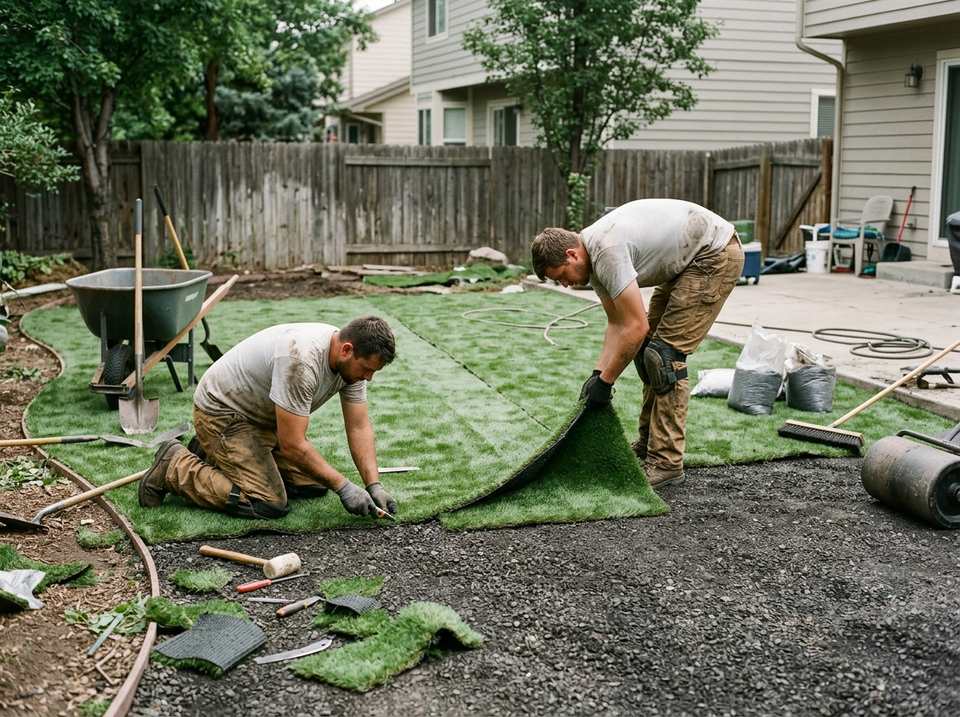
DIY or professional install?
DIY can halve the bill, but only if the base is done right.
| DIY | Professional | |
|---|---|---|
| Cost | Materials and tool rental | Materials plus labor |
| Typical saving | Vendors estimate about 35 to 60% | — |
| Time | A weekend or more for a small yard | Usually one to a few days |
| Risk | Base or seam mistakes are costly to fix | Installer handles it |
| Warranty | Turf warranty only | Often an installation warranty too |
Is it cheaper to install artificial grass yourself? Yes, usually by a third to more than half. But a bad base can cost more to fix than a pro install would have. See our DIY cost guide and installation guide.
Is faux grass cheaper than real grass long term?
Turf costs more on day one and less every year after; the payback depends on your water bill.
A real lawn is cheap to plant but costs money every year: water, mowing, fertiliser, weed control and reseeding. Faux grass flips that. Most of the cost is upfront, and the yearly running cost is small: an occasional rinse, cleaner and infill top-up.
So whether turf pays for itself depends on what your real lawn costs to keep. In a dry climate with high water rates and watering restrictions, the yearly savings are larger and payback comes sooner. In a rainy climate where a lawn barely needs watering, it takes much longer. We haven't found a reliable national payback figure, so work it out from your own water and lawn-care bills.
Does artificial grass pay for itself? It can, especially in dry regions with high water costs. Compare your yearly lawn spend with the upfront cost. See faux grass vs real grass and advantages and disadvantages.
How do you get fair quotes?
Compare quotes on the same spec, line by line. Use this checklist:
- Get three to five quotes. One quote tells you nothing about the market.
- Give every installer the same spec. Same area, same turf type, same extras.
- Ask for the turf brand and model. Not just "premium turf". See faux grass brands.
- Ask for the base depth and materials. A thin base is the easiest way to cut a quote and the most common cause of failure. See our base guide.
- Check what's included. Old lawn removal, disposal, weed barrier, edging, infill and pad.
- Ask about the warranty. Both the turf warranty and the installation warranty, in writing.
- Check timing and access. Who handles materials delivery and cleanup.
And for more ways to estimate, see our turf calculators and estimators.