Faux Grass vs Xeriscaping (2026): 7 Differences in Water, Heat, Runoff, Upkeep and Rebates
Xeriscaping wins on heat and wildlife. Faux grass wins as a play surface.
Xeriscaping is landscaping with drought-tolerant plants, rock and mulch to cut water use. Faux grass replaces a lawn with synthetic turf. Both save far more water than a thirsty lawn, and both are popular in dry states. They solve different problems, though. A xeriscape is a garden: cooler, living and good for pollinators. Faux grass is a lawn you can run on. Many dry-climate yards use both.
Sources: a Utah State University (USU) Extension fact sheet on the water quality impacts of artificial turf and xeriscaping, Southern Nevada Water Authority (SNWA) rules and water-use figures, and peer-reviewed research on turf plastics. Research date: 18 October 2026. Rebate rules change, so check your local utility.
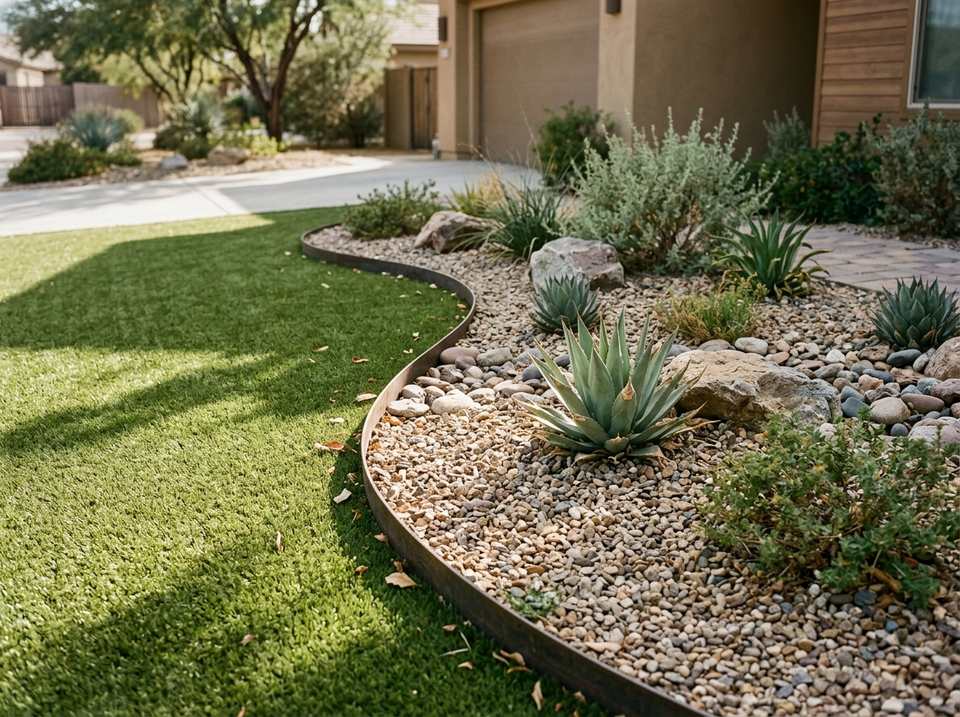
How do faux grass and xeriscaping compare?
Seven factors separate them.
| Factor | Xeriscaping | Faux grass |
|---|---|---|
| 1. Water | Low; drip irrigation while plants establish, then little | Very low; occasional rinsing |
| 2. Surface heat | Plants shade and cool the ground; rock can get hot | Gets much hotter than living plants in full sun |
| 3. Runoff | USU says it adds sediment and nitrates to stormwater | USU says it can shed microplastics and leach chemicals and metals |
| 4. Rain capture | USU found both capture less rainfall than traditional landscaping | Same finding |
| 5. Upkeep | Weeding, pruning, mulch top-ups | Brushing, rinsing, debris clearing |
| 6. Kids and dogs | Not a play surface; rock and spiky plants | A soft, mud-free play surface |
| 7. Wildlife | Habitat and food for pollinators and birds | No habitat |
Both choices cut water use sharply. SNWA says each square foot of grass in Las Vegas needs about 73 gallons of water a year, which is the baseline both replace.
Is xeriscaping better than artificial grass? For the environment and heat, usually yes. For a play lawn, faux grass is more practical.
Does artificial turf shed microplastics? Research says it can. USU lists turf as a source of microplastics in waterways. A 2023 study of Spanish rivers and coasts found turf fibres made up over 15% of the larger plastic pieces sampled. See PFAS-free faux grass for chemical questions.
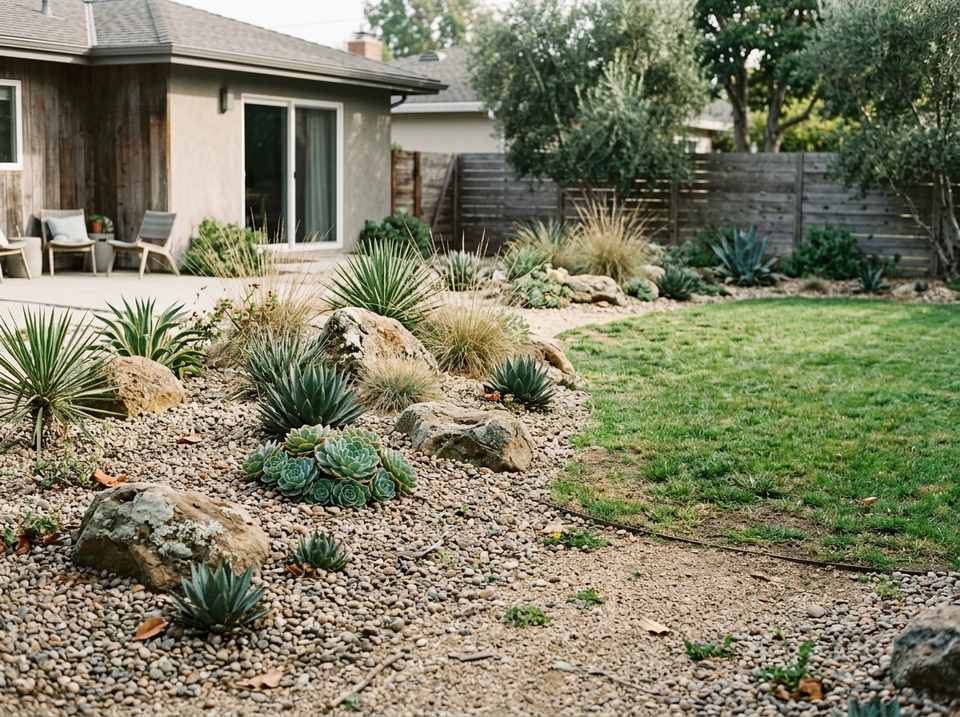
Which is better for your yard?
Match the choice to how you use the space.
| Your goal | Better choice | Why |
|---|---|---|
| A play lawn for kids or dogs | Faux grass | Soft, durable and mud-free |
| A garden for pollinators and birds | Xeriscaping | Living plants and habitat |
| The coolest yard in summer | Xeriscaping, with shade trees | Plants cool the ground |
| The least weekly upkeep | Faux grass | No weeding or pruning |
| The biggest rebate | Check your utility | Rules vary; some include turf with conditions |
| Both play space and garden | Both | A small turf lawn inside a xeriscape |
For dogs, see best faux grass for dogs. For heat, see faux grass for hot climates.
Cost over time
Cost depends on materials, labour and, often, rebates.
Xeriscaping costs vary with plants, rock, drip irrigation and design. It usually costs less upfront than faux grass over the same area, though large rock or hardscape can push it up. Faux grass costs more upfront, but its upkeep is low. See faux grass cost.
Rebates can change the maths. Many water utilities pay homeowners to remove lawns. Rules differ on turf. In Southern Nevada, SNWA's Water Smart Landscapes programme allows permeable artificial turf in a conversion, but only if the whole front or back yard meets its conditions for plant coverage, drip irrigation, mulch and weed barriers. Impermeable plastic doesn't qualify. Rebate amounts change, so check your utility's current rules before you start.
Once you know your rebate, run your turf numbers in our faux grass cost calculator.
Verdict
Many dry-climate yards do best with both. Here's how to decide:
- Choose xeriscaping for front yards, garden beds and anywhere you want a cooler, living landscape that supports wildlife.
- Choose faux grass for a play area or dog run where you need a soft, durable surface.
- Combine them with a small, permeable turf lawn surrounded by drought-tolerant beds. That can also help you meet rebate rules where turf is allowed with plant coverage.
Our take: from our hands-on work with artificial grass, a small turf panel framed by planting looks far more natural than a whole yard of plastic, because the living edges soften it and hide the seams, and in photos it reads as a lawn rather than a mat.
Weighing other options? See faux grass vs real grass, faux grass vs clover lawn and faux grass advantages and disadvantages.