Faux Grass Joining Tape (2026): How to Join Two Pieces of Turf and 5 Tapes That Work
As an Amazon Associate we earn from qualifying purchases.
Joining tape and seam tape are the same product: a strip under two turf edges that turns them into one piece.
Joining tape is laid under the place where two pieces of turf meet. The edges bond onto it, either through its own adhesive or through glue you add. This page is about small DIY joins: two offcuts on a balcony, a rug made from leftover pieces, a patch over a damaged spot. And for seaming a full lawn, see our seam tape guide.
To pick the tapes, we compared seller-listed specs on Amazon and read buyer review patterns.
Joining tape or seam tape: is there a difference?
The name changes across the Atlantic; the product doesn't.
In the UK, retailers usually call it joining tape. In the US, it's seam tape. Both describe the same thing: a non-woven strip that goes under a turf join. Both come in two types. Self-adhesive tape has a sticky face under a peel-off film. Glue-down tape is plain fabric that you coat with turf adhesive.
Widths are the same too. 6 in is the standard, with 12 in for heavier use and narrower 2 to 4 in tapes for small jobs and edges.
What is artificial grass joining tape? A strip of fabric tape laid under two turf edges so they bond together into one surface. For the full comparison of types, see our seam tape guide.
The 5 best joining tapes for small DIY joins
For small joins, a short roll of self-adhesive tape is all you need.
1. Linghou Self-Adhesive Joining Tape 6 in × 33 ft — Best Self-Adhesive Joining Tape
Size: 6 in × 33 ft | Type: self-adhesive | Includes: utility knife
The joining tape with the most buyer feedback on Amazon is also the simplest to use.
Linghou's tape is peel and stick: lay it under the join, peel the film, press both edges down. The seller says no extra glue is needed, and includes a knife for cutting it. A 33 ft roll handles several small joins, like a few balcony seams or a rug pieced from offcuts. Buyers often describe it as very sticky, so line up the edges before you press.
But self-adhesive tape is weaker than glue in long-term heat and wet. For a full lawn, use glue-down tape.
Our take: from our hands-on work with artificial grass, peel-and-stick tape is the right call for offcut rugs and balcony joins; it's quick, clean and easy to redo if a piece needs trimming.
2. Linghou Joining Tape 6 in × 16 ft — Best Short Roll for Patches
Size: 6 in × 16 ft | Type: self-adhesive
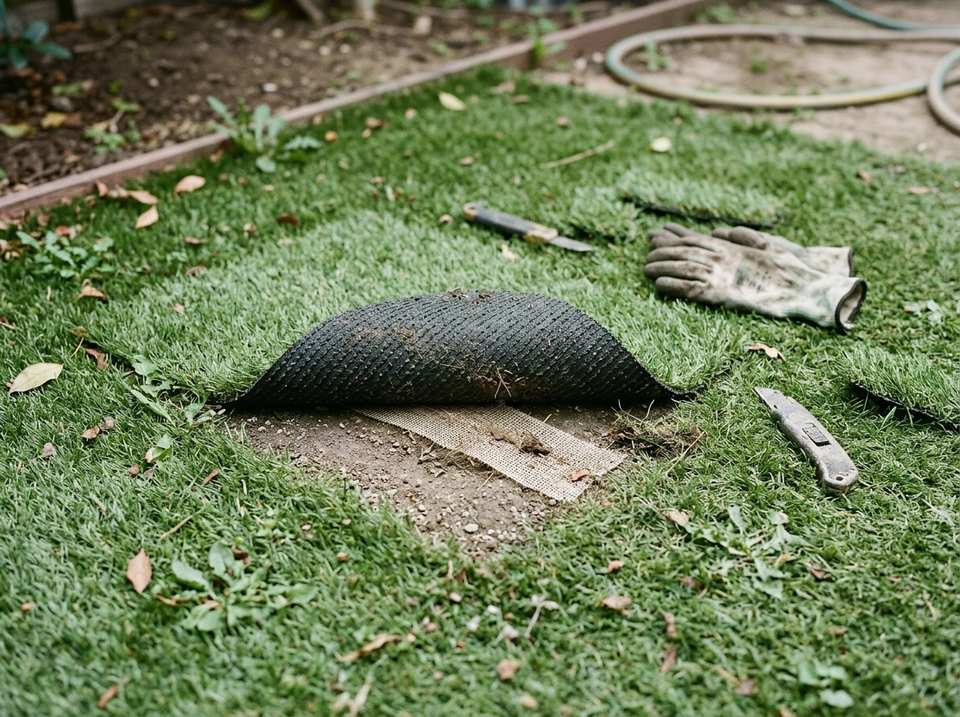
Patching one burnt spot doesn't need 33 ft of tape. A 16 ft roll is plenty.
This is the same Linghou tape as #1 in a shorter 16 ft roll. That's enough for a patch or two, a small rug join and some to spare. It shares the buyer feedback of the 33 ft roll. For a one-off repair, a short roll means less waste.
But check the length you need first. Two patches and a long seam can use up 16 ft quickly. See our repair guide.
Our take: for a single patch, a short roll is all we'd buy; leftover self-adhesive tape loses grip in storage, so a big roll for one repair is mostly waste.
3. Double-Sided Turf Tape 6 in × 16 ft for Hard Surfaces — Best for Rugs and Offcuts on Hard Floors
Size: 6 in × 16 ft | Type: double-sided | Use: hard surfaces (seller-listed)
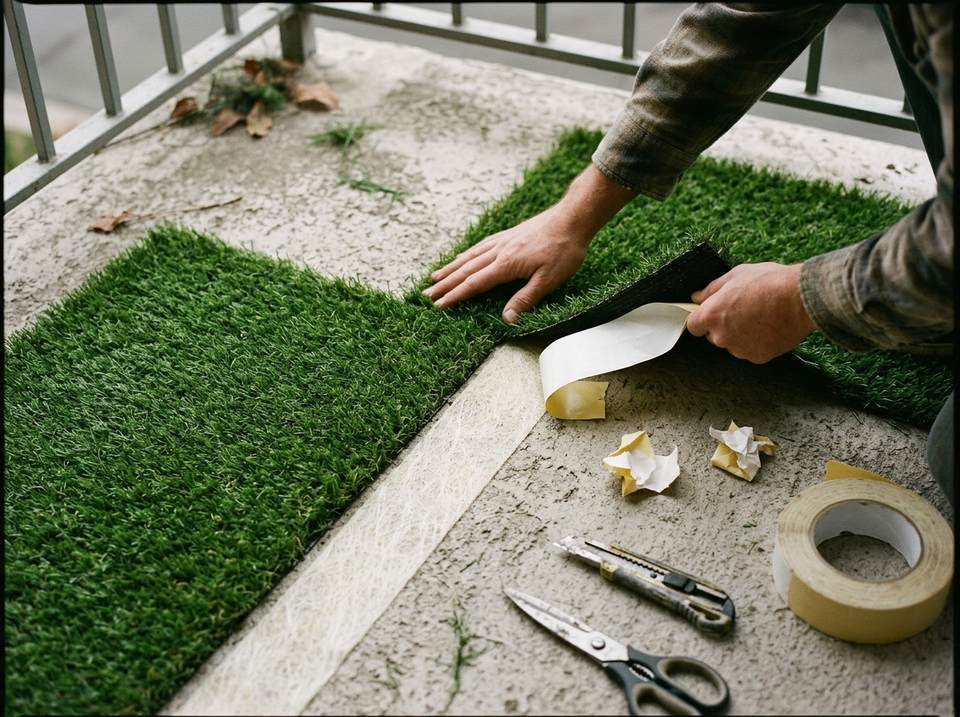
On a balcony or patio, you want the join to grip the floor too. Double-sided tape does both.
This tape is sticky on both faces. One side bonds the two turf edges, and the other side sticks to the hard surface below, so the join can't slide. The seller lists it for hard surfaces, which suits concrete balconies, patios and indoor floors.
But double-sided tape fixes the turf to the floor. If you'll want to lift it later, test on a hidden spot first.
Our take: in our experience laying turf on hard floors, joins that aren't anchored to the floor are the ones that drift apart under foot traffic, so double-sided tape solves the real problem here.
4. Pangda Tape + Threlaco Glue — Best Combination for Permanent Joins
Pangda: 6 in × 100 ft non-woven, no adhesive | Threlaco: 10 oz tube, green
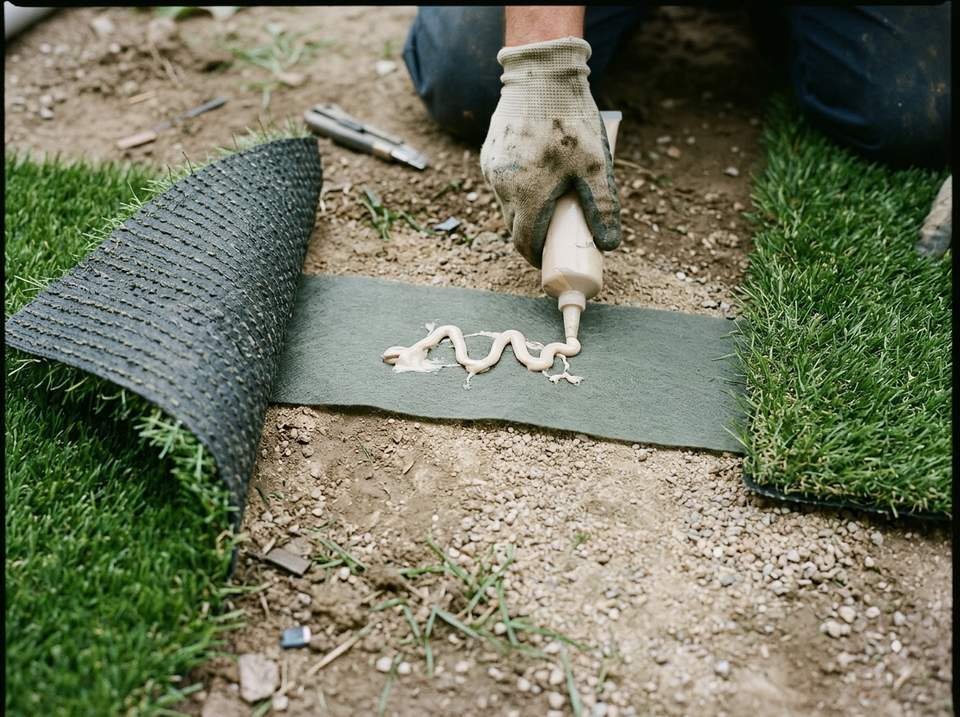
If the join has to last for years outdoors, use plain tape and real turf glue.
Pangda's tape is plain non-woven fabric with a rough face that the seller says absorbs glue for a stronger bond. Threlaco's green turf glue comes in a 10 oz tube with a nozzle, which suits a short join. The seller says you get 5 to 10 minutes to position the turf. One tube covers a small seam without opening a gallon bucket.
That's the strongest small-join setup here.
But Pangda is a newer listing with little buyer feedback yet, and glue takes more time and care than peel and stick. Don't over-apply, or it oozes into the blades.
Our take: for anything outdoors that has to last, glue on rough non-woven tape is the join we trust; peel-and-stick joins are the first to lift after a hot, wet season.
Pangda tape on Amazon · Threlaco glue on Amazon
5. LMHOME Green Joining Tape 6 in × 32.8 ft — Best Budget Joining Tape
Size: 6 in × 32.8 ft | Type: single-sided, hot-melt pressure-sensitive adhesive (seller) | Colour: green
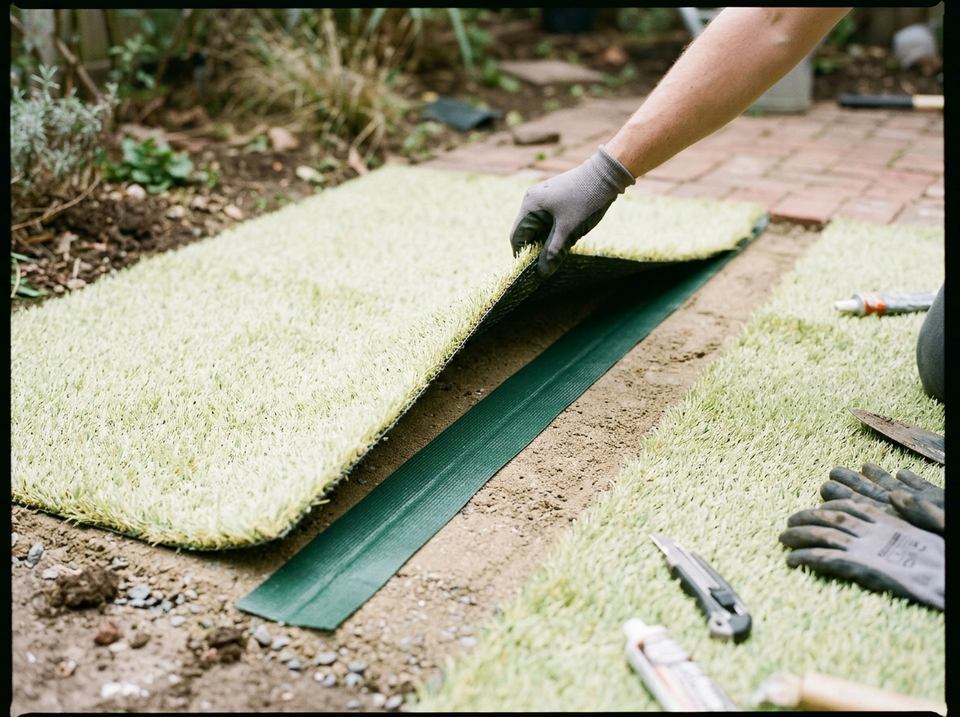
Green tape hides better than white if the join opens slightly.
LMHOME's tape is non-woven fabric with a hot-melt pressure-sensitive adhesive, which the seller says works in most temperatures. You peel the film and stick it to the back of the turf. It's green, so any small gap at the join blends into the grass.
But it has less buyer feedback than Linghou, and it's for the same small jobs. For heavy-use joins, step up to glue.
Our take: green tape is worth choosing on light-coloured turf; a slight gap over white tape catches the eye straight away, while green blends into the thatch.
How do you join two pieces of faux grass?
Fold both edges back, lay the tape, and press the edges down to meet. Here are the six steps:
- Match the grain. Lay both pieces with blades pointing the same way. Opposite grain looks like a different shade of green.
- Trim the edges straight. Cut along a stitch row from the back with a sharp knife. Trim off factory edges, which are wider than the inner rows. See our cutting guide.
- Fold back both edges. Fold each edge back about 6 in to expose the ground.
- Lay the tape. Place the tape centred under the join, sticky side up. Peel the film, or spread glue for plain tape.
- Fold the edges down to meet. Lower both edges onto the tape so they meet without overlapping, with a gap no wider than the gap between stitch rows.
- Press and brush. Press firmly along the whole join, then brush the blades across it to hide the line.
How do you join artificial grass without a visible line? Match the grain, trim factory edges, keep the gap tight and brush blades over the join. Joining offcuts? See our offcuts guide.
Joining tape questions
These are the joining questions DIYers ask most.
Can you join turf on concrete? Yes. Use double-sided tape like #3, or glue the join and the edges to the concrete. Leave drainage gaps so water can escape. See faux grass on concrete.
How long does joining tape last? It depends on the tape, the weather and the traffic. Self-adhesive tape on a small, low-traffic join can last years. In hot, wet or busy areas, glued joins last longer. If a join lifts, re-stick or re-glue it.
For seaming a full lawn, see our seam tape guide.