10 Clever Uses for Faux Grass Scraps (2026): Doormats, Planters, Crafts and Quick Repairs
As an Amazon Associate we earn from qualifying purchases.
Every faux grass install leaves scraps, and most of them are too useful to throw away.
Faux grass scraps are the small leftover pieces from an install: the strips trimmed off edges, the corners cut around a patio, the offcut from the end of a roll. They're too small for a lawn, but they're tough, weatherproof and already paid for. With a sharp knife and a little glue or tape, they turn into doormats, planter wraps and quick fixes around the home.
We gathered these ideas from UK turf brand Easigrass, retailer Grass Direct and Houzz, then added the how-to detail. Looking to buy cheap remnants instead? See our offcuts guide.
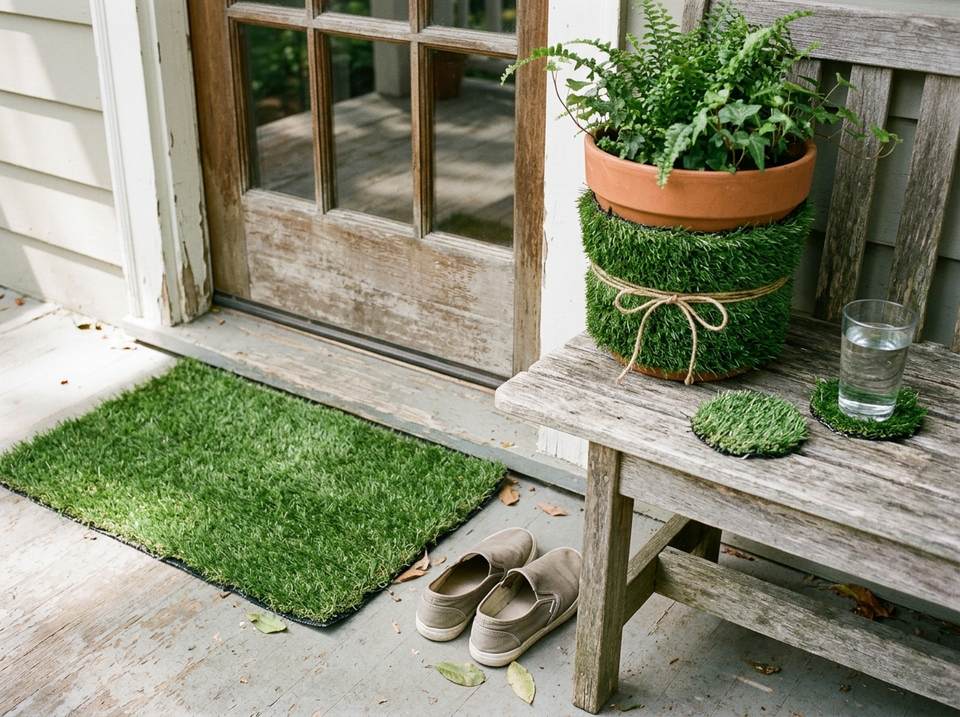
10 ways to use faux grass scraps
Here are ten easy projects, from a five-minute doormat to a patch repair.
1. A doormat. Easigrass suggests this one, and it's the easiest. Cut a piece about 18 × 30 in. The blades scrape mud off shoes like a brush, and you clean it with a hose. Short, stiff turf works best. You'll need: a utility knife and a straight edge.
2. Planter and hanging-basket wraps. Wrap a strip of turf around a plain plastic pot to turn it green. Or line the outside of a hanging basket. Easigrass lists planters among its upcycling ideas. You'll need: outdoor glue or double-sided tape. Gersoniel's 2 in double-sided turf tape suits small jobs. Gersoniel on Amazon
3. Balcony accent squares. Houzz notes that even a leftover half-metre can green a small balcony. Cut neat squares and lay them under a chair or by the door. You'll need: a knife and a straight edge. For a bigger balcony, see faux grass for balconies.
4. A pet bowl mat. A small piece under food and water bowls catches spills and stops bowls sliding. Rinse it in the sink. You'll need: a knife. Pick a short-pile scrap so food doesn't hide in it.
5. A table runner or centrepiece base. A strip of turf down a party or garden table makes a fresh green base for flowers, candles or Easter eggs. See our faux grass craft guide. You'll need: a knife, and felt or fabric to glue underneath so it doesn't scratch the table.
6. A kids' play mat for toy cars and figures. A small square becomes a field, a farm or a race-track infield. Kids love it. You'll need: a knife. Seal the edges (see below) so little fingers don't pull fibres out.
7. A shoe-cleaning pad. Fix a scrap to a board or a step by the back door. Wipe muddy boots on it before they come inside. You'll need: outdoor adhesive. Threlaco's 10 oz turf glue tube is handy for small jobs. Threlaco on Amazon
8. Patch repairs on your own lawn. Grass Direct points out that offcuts are perfect for repairs. Keep a few scraps from your install, so if a barbecue burns a hole or a dog digs, you can patch it with turf that matches exactly. See our repair guide. You'll need: seam tape and glue. See our seam tape guide.
9. A putting strip. A long, narrow offcut of short turf makes a putting practice strip for the hallway or garage. Add a cup at one end. You'll need: a knife and a short-pile scrap. For a proper green, see faux grass for putting greens.
10. Wall art and backdrop squares. Mount squares of turf on board for a green wall feature, a photo backdrop or a sign base. See faux grass walls and photo backdrops. You'll need: plywood or foam board, glue and staples.
What can you do with leftover artificial grass? Doormats, planter wraps, pet mats, crafts, repairs and more. Small pieces are surprisingly useful.
Can you make a doormat from turf? Yes, and it's one of the best uses. Short, stiff turf scrapes shoes well and dries fast.
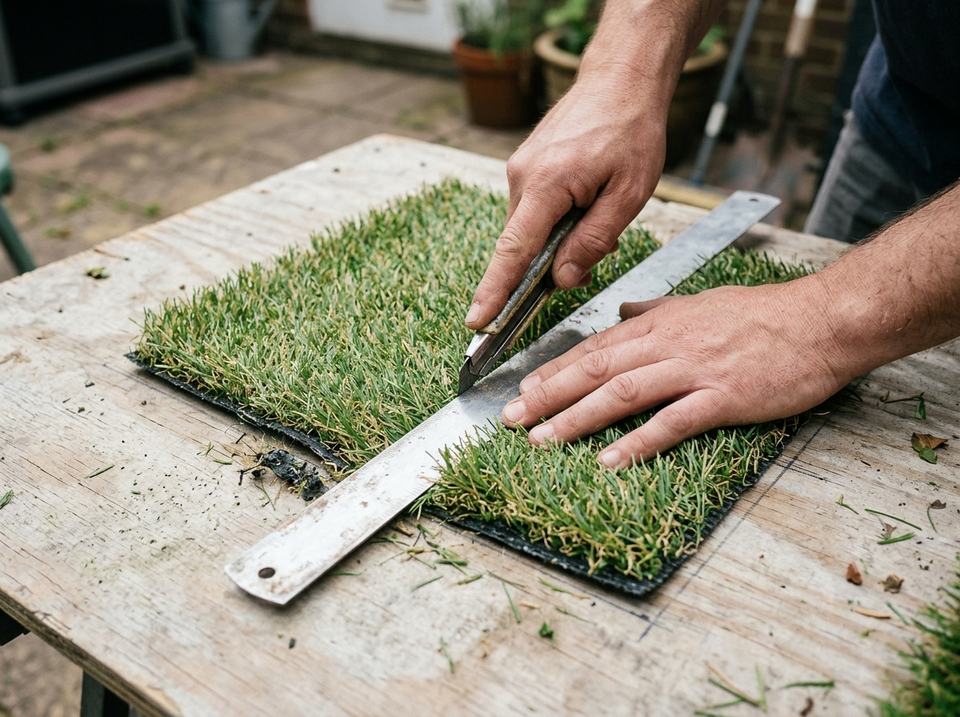
How do you cut and finish turf scraps neatly?
Cut from the back and the blades stay intact. Here's how:
- Turn the scrap upside down. Work on the backing, not the grass side.
- Mark your line. Draw on the backing with a marker and a straight edge.
- Cut between the stitch rows. Use a sharp utility knife. Cutting between rows keeps the blades whole. See our cutting guide.
- Seal the edges. On indoor or handled pieces, run a thin bead of glue along the cut edge, or fold edging or binding tape over it. This stops fibres pulling out.
- Add a backing for indoors. Glue felt underneath for tables, or a non-slip mat underneath for floors.
How do you stop turf edges fraying? Turf blades are tufted in, so a cut edge can lose a few blades over time. A thin line of glue along the edge, or binding tape, stops it.
Our take: from our hands-on work cutting artificial grass for stages and backdrops, a back-cut edge sealed with glue is what keeps small pieces looking tidy after handling; unsealed edges shed blades every time they're moved, and that shows fast on anything people touch.
What do you do with scraps you can't use?
Most curbside bins won't take turf, so reuse or donate first.
Turf is bonded plastic, so most household recycling services won't accept it. Check your local waste service, as some areas have drop-off points or specialist recyclers. Otherwise, offer clean pieces to schools, nurseries, craft groups or community gardens. Many are happy to take them. You can also list scraps free online, where crafters and DIYers often snap them up.
Be careful with any recycling claims you see online. Ask exactly how a recycler processes turf before you rely on it.
Want more craft ideas? See our faux grass craft guide.