Faux Grass Walls (2026): How to Put Turf on a Wall or Fence, Indoors and Out
As an Amazon Associate we earn from qualifying purchases.
A grass wall can be a roll of turf glued to plywood or a set of clip-together panels, and the choice depends on the surface and how long it stays up.
A faux grass wall is a vertical surface covered in green. There are two ways to build one. You can fix a roll of turf to the wall, usually over a plywood or batten frame. Or you can clip together grass or hedge panels, the leafy squares sold for privacy screens. Turf gives a smooth, lawn-like finish. Panels give a bushy, hedge-like look and come off easily.
This guide compares both methods and walks through each install. We drew on guidance from Unhappy Hipsters, Engineer Fix, UK turf maker Kedel and Australian green-wall brand Designer Plants. Before fixing anything outdoors, check who owns the fence and whether your HOA or landlord allows it. For panel picks, see our faux grass wall panels guide.
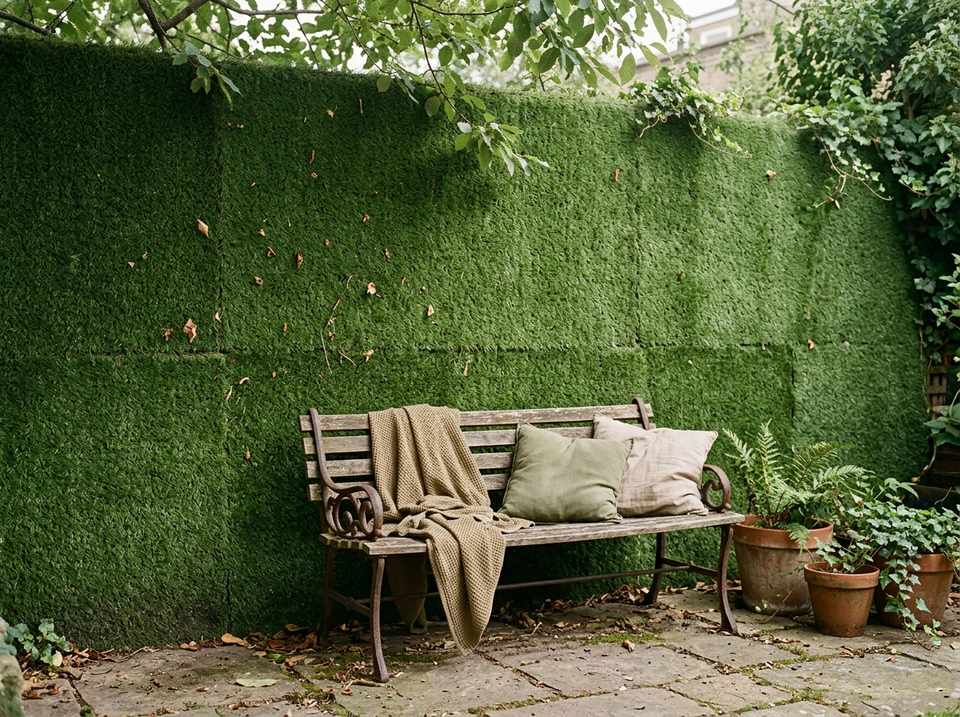
Turf roll or grass panels?
Turf gives a smooth lawn look; panels give a leafy hedge look.
| Turf roll | Grass or hedge panels | |
|---|---|---|
| Look | Smooth, like a lawn on its side | Leafy and textured, like a clipped hedge |
| Surface needed | Flat and solid, ideally plywood or battens | Any frame, fence or mesh |
| Fixing | Adhesive plus staples or screws | Clips, cable ties or screws |
| Seams | Visible if not trimmed carefully | Panels interlock; joins hide in the leaves |
| Removal | Hard; glue is permanent | Easy; unclip and lift |
| Best for | Feature walls, signs, photo walls | Fences, privacy screens, rentals |
Is it better to use turf or panels for a grass wall? Panels for fences, rentals and anywhere you might take it down. Turf for a smooth, permanent feature wall indoors or a sign backdrop.
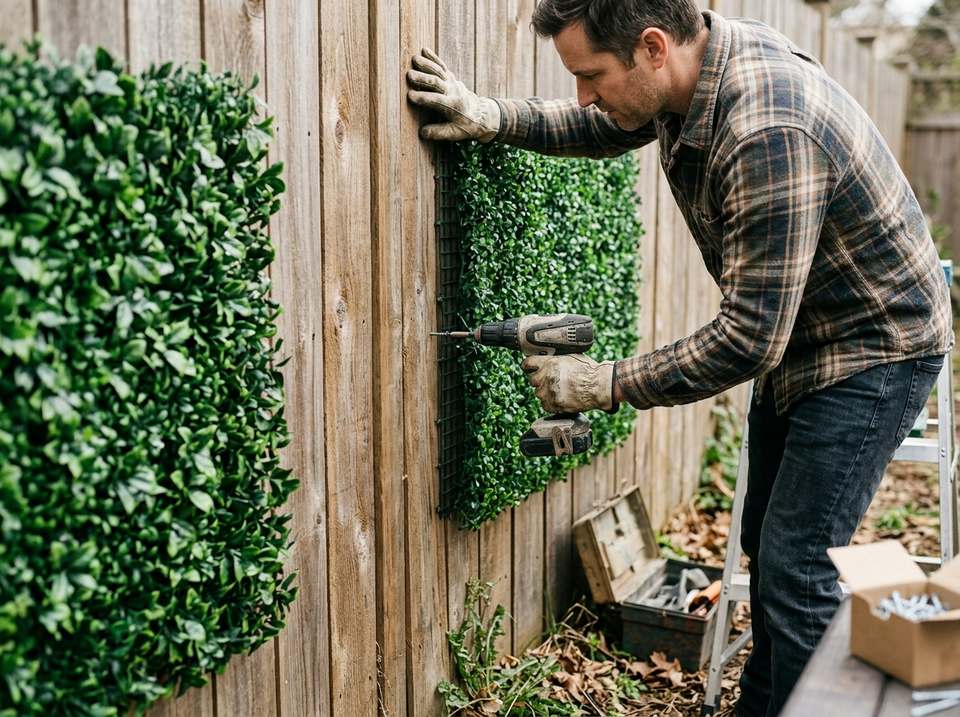
How do you put turf on a wall?
Turf fixed to a frame holds far better than turf glued straight to the wall. Here's how:
Materials: turf, weather-resistant turf adhesive, double-sided carpet tape, stainless steel staples or screws, plywood or timber battens, and optional caulk for edges.
- Clean and prepare the wall. Unhappy Hipsters stresses a clean, dry surface. Fill holes and cracks, so the turf lies flat.
- Build a frame. Engineer Fix notes that turf on a frame holds better than turf glued directly to a wall. Screw sheets of plywood, or a grid of timber battens, to the wall. The frame gives you something solid to staple into.
- Cut the turf to size. Measure the frame, and cut from the back with a sharp knife. Keep the grain running the same way on every piece. See our cutting guide.
- Apply adhesive. Spread turf adhesive over the plywood, or along each batten. For a removable indoor wall, use strong double-sided tape instead. See our adhesive guide.
- Press the turf on. Start at the top and work down, pressing firmly. A helper makes this much easier.
- Staple or screw it. Kedel's install guide suggests fixing about every 200 mm (8 in) into battens. Drive staples or nails at a slight angle into timber so they grip.
- Trim and finish. Trim the edges neatly, seal them with caulk if needed and brush the blades to hide fixings.
Our take: from building grass walls and backdrops ourselves, the frame matters more than the glue. Turf stapled to battens stays flat for years, while turf glued straight to drywall or paint starts peeling at the top edge first. Run every piece with the grain pointing down, too; blades that lean different ways show up as a patchwork the moment light hits the wall.
How do you attach artificial grass to a wall? Fix plywood or battens to the wall, glue the turf to the frame, then staple it every few inches.
What glue do you use? An outdoor turf adhesive for permanent walls. ROBERTS 6700 bonds most turf backings. ROBERTS 6700 on Amazon
How do you mount grass panels on a fence without damage?
On a fence, battens or a freestanding mesh frame keep panels secure without damage. Here are three methods:
On a metal fence: timber battens. Designer Plants suggests fixing vertical timber battens to the fence, about 40 cm (16 in) apart. Then screw or staple the panels to the battens. The battens spread the load and give you a solid fixing.
On a rendered or masonry wall: cement-sheet screws. Designer Plants suggests cement-sheet screws with washers on rendered walls. The washers stop the screw heads pulling through the panel mesh.
No drilling: a freestanding frame. For a rental, or a fence you don't own, set freestanding stakes about 1 m (3 ft) apart in front of the fence. Stretch mesh between them, then zip-tie the panels to the mesh. Nothing touches the fence.
Whichever method you use outdoors, choose UV-stabilised panels so they don't fade. KASZOO's 20 × 20 in boxwood panels are one option. KASZOO on Amazon · Wall panels guide
How do you attach grass panels to a metal fence? Fix timber battens to the fence, then fix the panels to the battens. Cable ties also work for light panels.
Can you do it without drilling? Yes, with a freestanding frame of stakes and mesh, or cable ties onto a chain-link fence.
Grass wall questions
These are the wall questions buyers ask most.
Do grass walls fade outside? They can, without UV protection. Choose turf or panels labelled UV-stabilised, and check any fade warranty. See UV-resistant faux grass.
Are they a fire risk? Plastic turf and panels can burn. For shops, restaurants and venues, choose products with a fire rating and keep them away from heaters and grills. Check local fire rules for commercial spaces.
How do you clean them? Outdoors, hose them down or use a leaf blower on a low setting. Indoors, dust with a soft brush or a vacuum on low suction.
Want a backdrop for photos? See faux grass for photo backdrops.