10 Faux Grass Border Ideas (2026): Stone, Gravel, Pavers, Curbing and Wood Edges That Frame Turf
As an Amazon Associate we earn from qualifying purchases.
The border is what turns a patch of turf into a finished lawn.
A faux grass border is a strip of hard or loose material framing the turf's edge. It's chosen for looks, upkeep and a clean line. A good border hides the turf's cut edge, separates the lawn from beds and paths, and gives the whole garden a designed feel. A bad one, or none at all, leaves the turf looking like a rug thrown on the ground.
This guide gives ten border ideas, each with its look, cost level, upkeep and permanence. We drew on ideas from installer Install It Direct, The Grass Outlet, Hello Gravel and AOL's garden coverage. For functional edging that holds turf in place, see our faux grass edging guide.
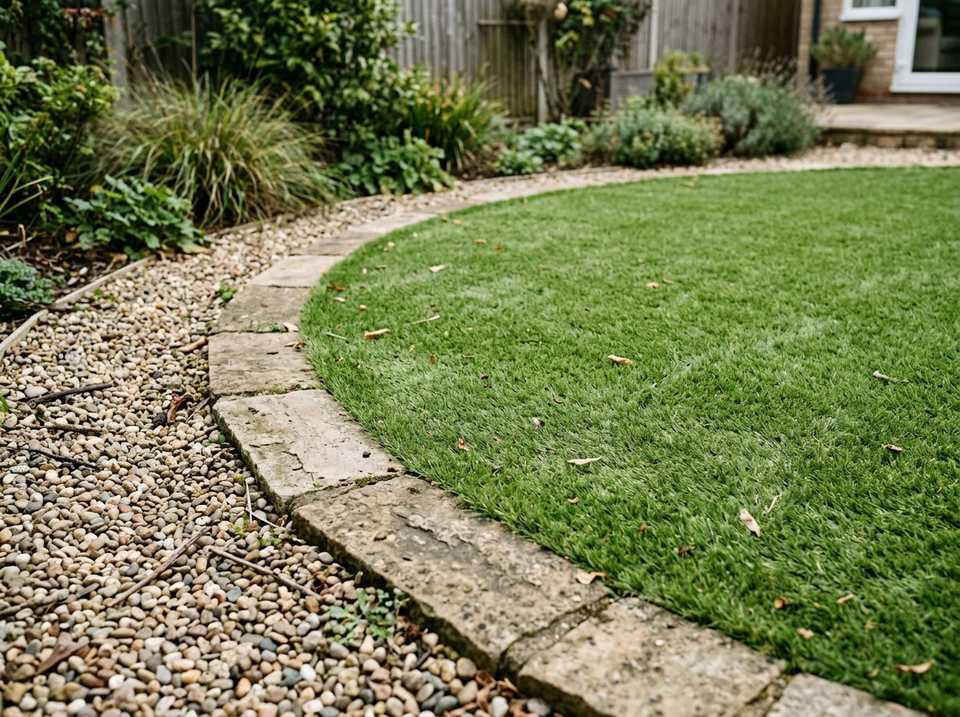
10 border ideas for faux grass
These ten borders cover every style and budget.
1. Concrete or stamped curbing. A continuous concrete curb poured around the lawn. Install It Direct calls curbing a permanent option. It can be coloured or stamped to look like stone. Cost: higher · Upkeep: very low · Permanence: permanent
2. A paver strip. A single row of pavers set flush with the turf. It gives a crisp, clean line and a hard edge to fix turf against. Install It Direct lists pavers as a popular choice. Cost: medium · Upkeep: low · Permanence: long-lasting
3. Flagstone. Irregular flat stones laid around the edge for a rustic, natural look. It suits cottage and natural gardens. Cost: medium to high · Upkeep: low · Permanence: long-lasting
4. River rock. Smooth, rounded stones in a band around the lawn. River rock drains well, so it's useful along downspouts and low edges. Cost: medium · Upkeep: medium, as leaves collect · Permanence: semi-permanent
5. Pea gravel with a metal strip. Small, rounded gravel held back from the turf by a thin metal edge. It's affordable and looks neat. The metal strip stops stones spilling onto the lawn. Cost: low · Upkeep: medium · Permanence: semi-permanent
6. Crushed granite. Decomposed or crushed granite gives a warm, compacted border that suits dry, desert-style gardens. See desert landscaping with faux grass. Cost: low to medium · Upkeep: medium · Permanence: semi-permanent
7. Steel edging. A thin steel strip gives the cleanest, most modern line, with almost nothing visible. It works alone or as the barrier between turf and gravel. Anleolife's 60 ft galvanised steel edging is one option. Anleolife on Amazon Cost: medium · Upkeep: very low · Permanence: long-lasting
8. Timber sleepers or railroad ties. Chunky timber edges give a rustic, raised border and are easy to nail turf into. A Tractor By Net forum thread notes that tall ties can get in the way of mowing next to real grass. Use treated or composite timber, which resists rot better. Cost: low to medium · Upkeep: medium, as timber can rot · Permanence: several years
9. Brick soldier course. Bricks set on end in a neat row create a traditional, formal edge. They suit older homes and brick paths. Cost: medium · Upkeep: low · Permanence: long-lasting
10. A planted border with mulch. A bed of shrubs, grasses or flowers around the lawn, with bark mulch. It's the softest look, but needs a barrier between mulch and turf, or the mulch washes onto the lawn. Master Mark's wood-grain Terrace Board edging works well here. Master Mark on Amazon Cost: varies · Upkeep: higher · Permanence: changes with the planting
What can I use as a border for artificial grass? Curbing, pavers, flagstone, river rock, gravel, crushed granite, steel, timber, brick or a planted bed.
What is the best edging for artificial grass? For looks and low upkeep, a paver strip or steel edge. For a permanent, curved border, concrete curbing. For a budget, gravel with a metal strip.
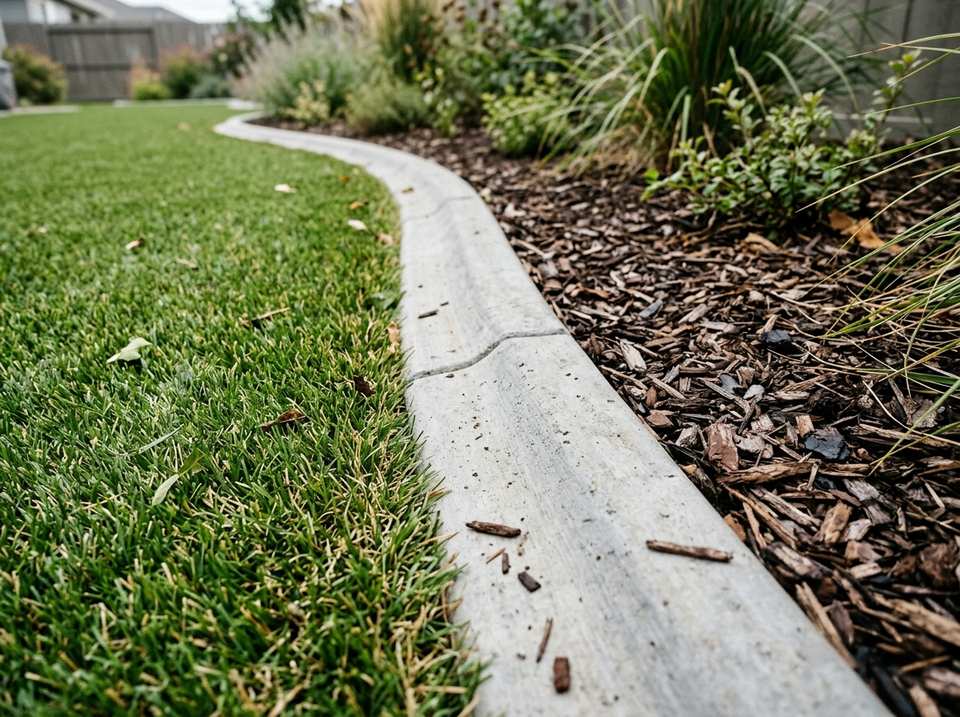
How do you choose: durability or cost?
Stone lasts longest; gravel and wood cost less but need more care.
| Border | Durability | Cost | Upkeep | Permanence |
|---|---|---|---|---|
| Concrete curbing | Very high | Higher | Very low | Permanent |
| Paver strip | High | Medium | Low | Long-lasting |
| Flagstone | High | Medium to high | Low | Long-lasting |
| Brick | High | Medium | Low | Long-lasting |
| Steel edging | High | Medium | Very low | Long-lasting |
| River rock | Medium | Medium | Medium | Semi-permanent |
| Pea gravel | Medium | Low | Medium | Semi-permanent |
| Crushed granite | Medium | Low to medium | Medium | Semi-permanent |
| Timber sleepers | Medium | Low to medium | Medium | Several years |
| Planted border | Varies | Varies | Higher | Changes over time |
If you plan to stay for years, a stone, brick or concrete border pays back in low upkeep. If you rent or may redesign, gravel or timber is cheaper and easier to change.
Our take: from framing artificial grass on event stages and backdrops, a hard, crisp edge is what makes turf read as a real lawn rather than a mat. A cut turf edge left loose curls and frays with handling, so whatever border you pick, make sure the turf is fixed firmly against it.
How do you keep gravel out of the turf?
A thin metal strip is the cheapest way to keep stones off the lawn. Here are four tips:
- Put a strip between gravel and turf. The Grass Outlet recommends a strip edge under or between gravel and lawn. Steel or plastic both work.
- Make the border at least 12 in wide. Hello Gravel suggests borders of about 12 in or more. Narrow gravel strips get kicked onto the lawn.
- Use smaller, flatter stones. AOL's garden coverage notes that smaller stones stay put better than large, round ones that roll.
- Lay a weed barrier under the gravel. It stops weeds and stops gravel sinking into the soil. See our weed barrier guide.
For the functional edge that holds the turf itself, see our faux grass edging guide. For whole-garden ideas, see faux grass garden ideas.